Connector Improvement: Business Central API Encoded
Not planned
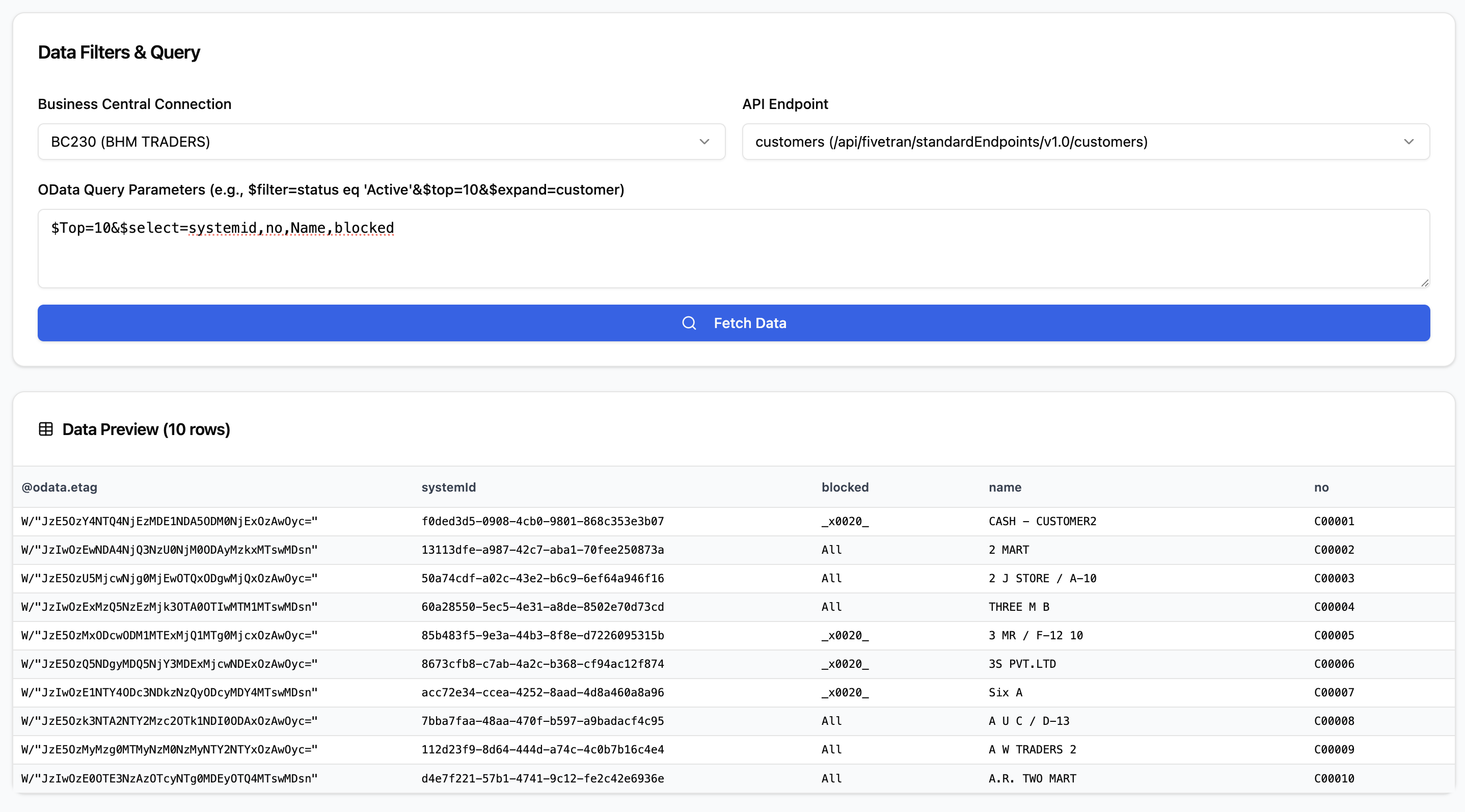
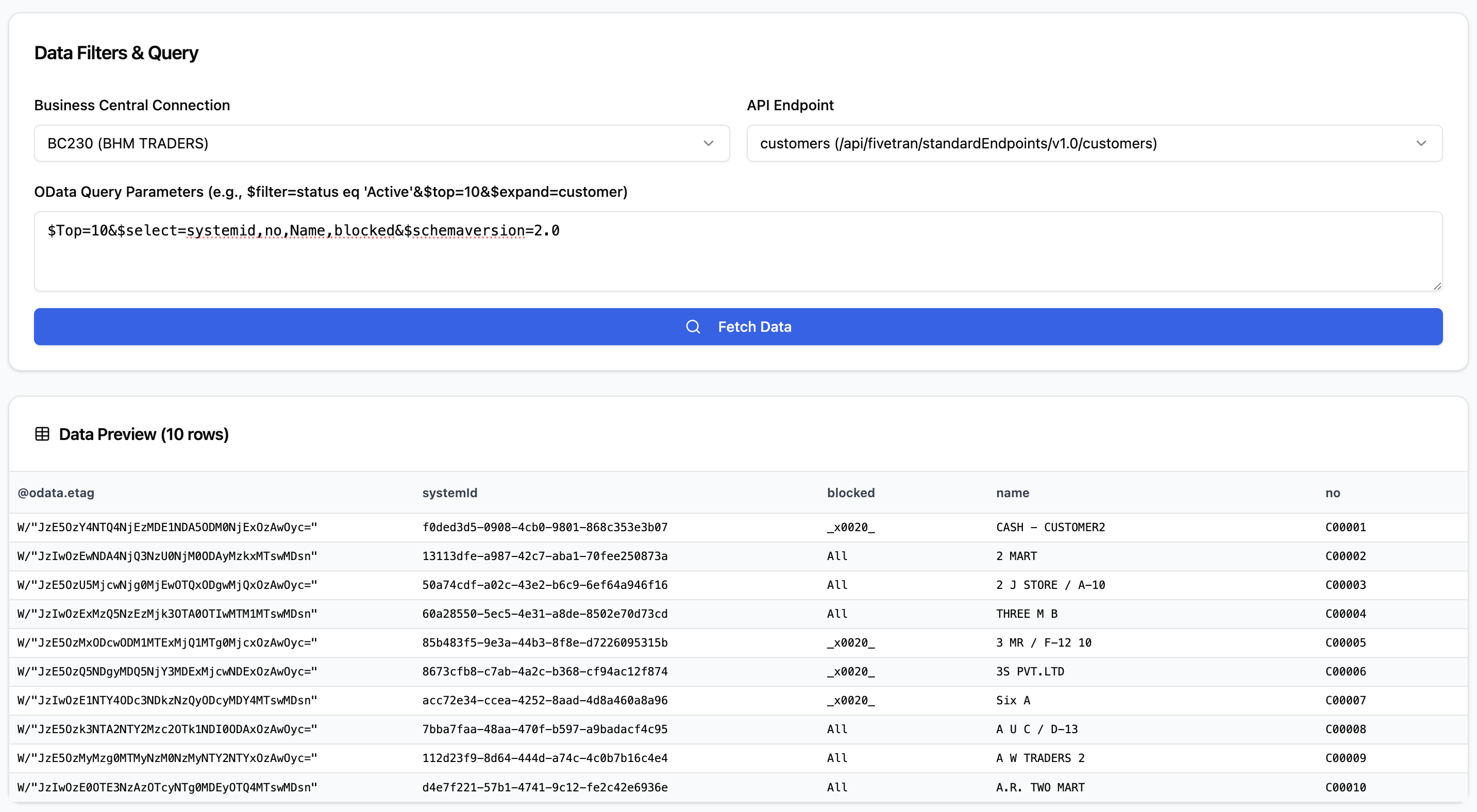
The Business central Connector returns encoded values in the api which microsoft has a solution , You need to fix the requests with $schemaversion=1.0 to rectify the response.
The string "x0020" in the context of Dynamics 365 Business Central APIs, particularly when dealing with API v2.0 and AL Enum objects, represents the Unicode encoded form of a space character.
this issue is easily fixable if you can give option to choose the schemaversion parameter on the source connector
Key characteristics and implications of using $schemaversion=1.0:
Default Behavior: Prior to Business Central version 24, the default schema version for custom APIs was 1.0 if not explicitly specified. As of version 24, the default for custom APIs is now 2.0.
Enum Handling: In schema version 1.0, enum fields in API responses would return the enum captions (display names), whereas version 2.0 typically returns the enum values (internal names).
Unicode Encoding: Version 1.0 does not fully support posting values with Unicode encoding, which is a feature available in version 2.0.
Encoded Characters (e.g., _x0020_): When empty values for enum fields are encountered in schema version 1.0, they can be translated into encoded characters like _x0020_ in the API response, representing a space. This behavior differs from version 2.0.
Enforcing Schema Version 1.0:
While version 2.0 is now the default and generally recommended for its enhanced features, it is still possible to explicitly enforce schema version 1.0 for custom APIs by appending ?$schemaversion=1.0 to the API URL. This might be done to maintain compatibility with older integrations or to achieve specific behaviors, such as receiving enum captions instead of values.

-
Official comment

Hi Hassan
Thanks for raising this. We understand the issue you're seeing with encoded values from the Business Central API and the need to control the schemaversion parameter. We'll review this internally with our engineering team and share an update once we have clarity on next steps.
Best
Sandeep -
Hi Hassan Nazeer,
Thank you for your suggestion regarding the Business Central connector.
Supporting schema version upgrades would entail a significant change on our end, especially since version 2.0 is currently recommended. At this time, it's not planned due to limited demand, but we will track votes and comments for potential prioritization.
Could you share if there are challenges in adjusting downstream queries to accommodate the more detailed data points in version 2.0? We appreciate your input and encourage you to upvote this request for future consideration.
Best,
Sandeep -
This is extremely unfortunate and completely disappointing.
After a long support ticket discussion, and after multiple technical clarifications with your team — including direct engagement with your developer — we had already reached a clear agreement that this Microsoft-side change requires an adaptation from your end. This is not something that should be categorized as a “feature request”.
What I strongly disagree with is how your technical team has now reframed a clear integration capacity limitation as a feature request, forcing me to submit it under that category, which is not only inaccurate but also unfair.
This is not a request for new functionality.
This is a Fivetran capacity / connector limitation, and it is directly impacting an active implementation that I am delivering for a client.I have already invested significant time and effort troubleshooting this issue, including explaining the technical root cause in detail and providing the necessary proof to your team. Yet despite all this, the matter has been unnecessarily dragged on, resulting in wasted time, delays, and avoidable loss on my side.
At this stage, I am formally requesting:
1) Immediate acknowledgement that this is an implementation-blocking connector limitation, not a feature request.
2) A clear commitment and timeline for resolution.
3) Compensation / accountability for the loss incurred, since this issue has directly affected my client delivery and caused measurable disruption after I followed every required process from your side.This experience has caused serious frustration and has significantly impacted my trust in your handling of production-critical issues. I expect this to be escalated and resolved urgently.
-
Hi Hassan,
I understand your frustration and want to clarify our position.
Microsoft changed the default Business Central API behavior starting in version 24. From our side, this does not represent a regression or a connector issue. The Business Central connector integrates with the default and Microsoft-recommended schema version (v2.0).
We evolve the connector based on the use cases we see across customers, optimizing the schema to support those use cases at scale. To keep the product simple and predictable, we intentionally make a single default choice wherever possible. Our goal is to avoid introducing configuration options that add complexity or confusion unless they are necessary to work around unavoidable system limitations.
At this point, we haven’t seen broader customer demand for supporting multiple schema versions, nor have we identified functional gaps in schema version 2.0 that block common use cases. For that reason, adding a configurable
$schemaversionparameter has been evaluated as a feature-level change rather than a bug fix and is not currently planned.If there are specific use cases that cannot be supported with schema version 2.0, we’d be open to reviewing concrete examples. Understanding what breaks functionally (rather than differences in representation) would help us assess impact and prioritization more effectively.
Best,
Sandeep
Please sign in to leave a comment.
Comments
4 comments